Wisdom Tooth Removal in Karaikkudi
Experiencing Pain, Swelling, or Discomfort Around Your Wisdom Tooth?
Wisdom teeth are the last permanent molars to develop and may not always erupt normally. When they become impacted, partially erupted, or infected, they can cause pain, swelling, gum infections, difficulty chewing, and damage to nearby teeth. Wisdom tooth removal is recommended only when clinical examination and diagnostic evaluation indicate that the tooth is affecting your oral health or is likely to cause future complications. At Thamba Kids & Family Dentistry, every treatment plan is personalized to the position of your wisdom tooth, your symptoms, and your overall oral health to ensure safe and appropriate care.
Wisdom Tooth Removal in Karaikkudi for Comfortable Chewing and Better Oral Health
Wisdom teeth, also known as third molars, usually develop between the ages of 17 and 25. While some erupt normally and function without causing problems, others may remain trapped beneath the gums, emerge only partially, or grow in an abnormal direction due to limited space in the jaw.
These changes can make cleaning difficult and increase the risk of gum infections, food accumulation, discomfort, and damage to neighbouring teeth. Early assessment allows your dentist to determine whether observation or wisdom tooth removal is the most appropriate option.
At Thamba Kids & Family Dentistry, we provide wisdom tooth removal in Karaikkudi for patients experiencing symptoms related to impacted or problematic wisdom teeth. Every treatment recommendation is based on a detailed clinical examination and diagnostic findings to help preserve your overall oral health.
What Is a Wisdom Tooth?
A wisdom tooth is the third and final molar that develops at the back of the mouth, usually during the late teenage years or early adulthood. Most people have four wisdom teeth, although some may naturally have fewer or none.
A wisdom tooth does not always require removal. If it erupts fully, aligns properly, and can be cleaned effectively, it may remain healthy without causing any problems. Removal is generally considered only when the tooth affects oral health or increases the risk of future complications.
Why Do Wisdom Teeth Cause Problems?
Not every wisdom tooth creates difficulties, but problems can arise when there is insufficient space for the tooth to erupt properly or when it develops in an unfavourable position.
Common reasons include:
- Limited space within the jaw
- Partial eruption through the gums
- Sideways or angled tooth growth
- Food and bacteria becoming trapped around the tooth
- Difficulty maintaining proper oral hygiene
- Pressure on neighbouring teeth
These factors may increase the likelihood of infection, inflammation, and discomfort if left untreated.
How Do You Know If Your Wisdom Tooth Needs Attention?
Wisdom tooth problems often begin gradually. Some people experience mild discomfort, while others notice repeated episodes of swelling or difficulty chewing before seeking dental care.
You Should Arrange a Dental Evaluation If You Notice
- Pain behind the last molar
- Swollen or tender gums
- Difficulty opening your mouth comfortably
- Pain while chewing
- Food is becoming trapped around the wisdom tooth
- Unpleasant taste or persistent bad breath
- Swelling around the jaw
- Repeated gum infections near the wisdom tooth
A comprehensive examination helps determine whether the symptoms are related to the wisdom tooth or another dental condition.
When Is Wisdom Tooth Removal Recommended?
Wisdom tooth removal is recommended when the tooth is causing pain, repeated infections, damage to neighbouring teeth, or other oral health complications. The decision is based on clinical findings, symptoms, and diagnostic imaging rather than age alone.
Your dentist may recommend removal if:
- The wisdom tooth is impacted
- Recurrent gum infections develop
- Pain affects daily activities
- Tooth decay cannot be managed effectively
- The neighbouring tooth is at risk of damage
- The wisdom tooth interferes with normal chewing
- Proper cleaning is difficult because of its position
Every treatment recommendation is personalised to your oral health and the condition of the affected tooth.
What Types of Wisdom Tooth Impaction Can Occur?
An impacted wisdom tooth cannot erupt fully into its normal position because of limited space or obstruction. The type of impaction influences both the symptoms and the treatment approach.
| Type of Impaction | Description |
|---|---|
| Soft Tissue Impaction | Part of the tooth remains covered by gum tissue, making cleaning difficult and increasing the risk of gum infection. |
| Partial Bony Impaction | The tooth is partially covered by jawbone and partially visible through the gums. |
| Complete Bony Impaction | The wisdom tooth remains completely enclosed within the jawbone and does not erupt into the mouth. |
| Angular Impaction | The tooth grows at an angle, which may place pressure on the neighbouring tooth or surrounding tissues. |
A detailed clinical examination and appropriate dental imaging help determine the position of the wisdom tooth and the most suitable treatment approach.
Does Every Wisdom Tooth Need to Be Removed?
No. Not every wisdom tooth requires removal. A wisdom tooth that has fully erupted, is properly aligned, functions normally, and can be cleaned effectively may not need any treatment. Removal is generally recommended only when the tooth causes symptoms or increases the risk of future oral health problems.
Your dentist will assess several factors before recommending treatment, including:
- Position of the wisdom tooth
- Available space in the jaw
- Gum health around the tooth
- Ability to maintain oral hygiene
- Presence of pain, infection, or decay
- Effect on neighbouring teeth
Treatment recommendations are always based on clinical findings rather than removing wisdom teeth routinely.
What Happens If an Impacted Wisdom Tooth Is Left Untreated?
Some impacted wisdom teeth remain symptom-free for years, while others may gradually lead to repeated infections, tooth decay, gum problems, or damage to neighbouring teeth. Regular monitoring or timely removal may be recommended depending on the condition of the tooth.
Possible complications include:
- Recurrent gum infections
- Tooth decay affecting difficult-to-clean areas
- Damage to the adjacent molar
- Formation of periodontal pockets
- Jaw discomfort during chewing
- Cyst formation in selected cases
Early evaluation allows treatment decisions to be made before complications become more complex.
How Is a Wisdom Tooth Evaluated Before Removal?
Every wisdom tooth is different. Before recommending removal, your dentist performs a detailed assessment to understand the tooth's position, surrounding structures, and overall oral health.
Your Assessment May Include
- Clinical examination
- Digital dental X-rays
- Evaluation of tooth position
- Assessment of neighbouring teeth
- Gum health examination
- Bite assessment
- Medical and dental history review
This evaluation helps determine whether simple extraction, surgical removal, or periodic monitoring is the most appropriate approach.
Can an Impacted Wisdom Tooth Affect the Neighbouring Tooth?
Yes. Depending on its position, an impacted wisdom tooth may place pressure on the adjacent molar or create areas where plaque and food become trapped. This can increase the risk of tooth decay, gum inflammation, or damage to the supporting tissues around the neighbouring tooth.
Your dentist evaluates:
- Contact between the wisdom tooth and the second molar
- Signs of decay
- Gum health
- Bone support
- Available space
Protecting neighbouring teeth is often an important consideration when planning treatment.
When Is Surgical Wisdom Tooth Removal Recommended?
Surgical removal may be recommended when the wisdom tooth cannot be removed through a routine extraction because it remains partially or completely covered by gum tissue or bone.
Your dentist may consider surgical removal when:
- The tooth is completely impacted
- Bone covers part of the tooth
- The wisdom tooth is positioned horizontally
- Access for routine extraction is limited
- The tooth is associated with repeated infection or pain
The exact treatment approach depends on the position of the tooth and your individual clinical findings.
What Should You Know Before Wisdom Tooth Removal?
Preparing for treatment begins with understanding your diagnosis and discussing the planned procedure with your dentist.
Before treatment, your dentist will explain:
- Why removal has been recommended
- The position of the wisdom tooth
- The expected treatment approach
- Anaesthesia options
- Recovery expectations
- Post-treatment instructions
Having a clear understanding of the procedure helps patients feel more confident and prepared.

Why Choose Thamba Kids & Family Dentistry for Wisdom Tooth Removal in Karaikkudi?
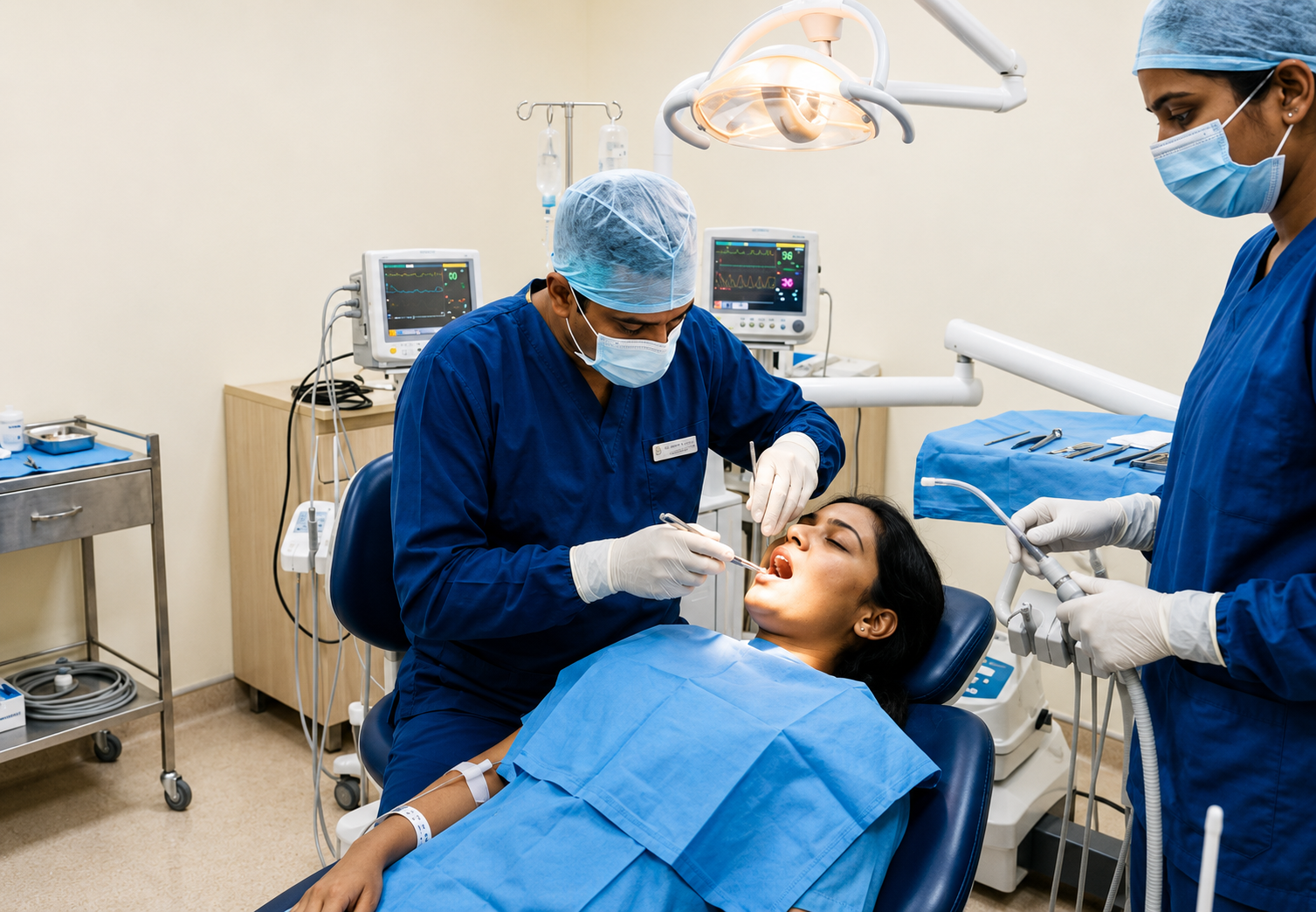
Wisdom tooth removal requires careful diagnosis, precise treatment planning, and an approach that prioritises patient comfort and long-term oral health. At Thamba Kids & Family Dentistry, every case is individually assessed to determine whether monitoring, routine extraction, or surgical removal is the most appropriate option.
Our focus is not simply removing a tooth—it is protecting surrounding teeth, preserving healthy oral tissues, and ensuring treatment is recommended only when clinically necessary.
- Comprehensive wisdom tooth assessment
- Digital imaging for accurate diagnosis
- Personalised treatment planning
- Careful evaluation of impacted teeth
- Patient-focused surgical approach
- Clear explanation of treatment options
- Comfortable clinical environment
- Long-term focus on preserving oral health
Why Patients Trust Our Care
Is Wisdom Tooth Removal Always a Surgical Procedure?
No. The method of wisdom tooth removal depends on how the tooth has developed. Fully erupted wisdom teeth may often be removed using a routine extraction, while impacted or partially erupted teeth may require a surgical approach.
Your dentist will recommend the most appropriate technique after evaluating:
- Position of the wisdom tooth
- Degree of eruption
- Bone or gum coverage
- Root development
- Relationship with surrounding teeth
The treatment plan is always based on your individual clinical findings rather than using the same approach for every patient.
How Long Does It Take to Recover After Wisdom Tooth Removal?
Recovery varies depending on the position of the tooth, the type of extraction performed, and your body's natural healing response. Most patients gradually return to their normal daily routine over the following days, while complete healing of the extraction site continues over a longer period.
Several factors influence healing, including:
- Complexity of the extraction
- Overall oral health
- Following post-treatment instructions
- Smoking or tobacco use
- Existing infection before treatment
Your dentist will provide personalised guidance to support a comfortable recovery.
What Can You Eat After Wisdom Tooth Removal?
During the initial healing period, soft foods are generally recommended to avoid disturbing the extraction site. As healing progresses, you can gradually return to your regular diet based on your dentist's advice.
Suitable foods during early recovery may include:
- Yogurt
- Mashed potatoes
- Soft rice preparations
- Smooth soups
- Scrambled eggs
- Fruit smoothies (without using a straw)
Avoid hard, crunchy, spicy, or very hot foods until your dentist confirms that normal eating can be resumed comfortably.
What Are the Signs That Your Extraction Site Is Healing Normally?
Healing usually progresses gradually over the days following wisdom tooth removal. Mild discomfort, temporary swelling, and gradual improvement are common parts of the normal healing process.
Healthy healing typically involves:
- Gradually reducing discomfort
- Improvement in swelling
- Healthy gum tissue formation
- Comfortable mouth opening over time
- Progressive return to normal chewing
If symptoms become worse instead of improving, it is important to contact your dentist for a review.
When Should You Contact Your Dentist After Wisdom Tooth Removal?
While most patients recover without complications, certain symptoms should be professionally evaluated.
Arrange a follow-up appointment if you experience:
- Persistent or increasing pain
- Continuous bleeding
- Swelling that worsens after several days
- Difficulty opening your mouth that does not improve
- Fever or signs of infection
- An unpleasant taste or discharge from the extraction area
Early assessment allows any concerns to be managed promptly and supports a smoother recovery.
Can You Delay Wisdom Tooth Removal If the Pain Comes and Goes?
Some wisdom teeth cause occasional discomfort that settles temporarily before recurring again. Even if symptoms improve, the underlying cause may still remain.
Delaying treatment may allow recurring problems such as:
- Repeated gum infections
- Food impaction around the wisdom tooth
- Progressive decay
- Damage to neighbouring teeth
- Ongoing inflammation
A clinical evaluation helps determine whether monitoring or removal is the safest long-term approach.
Areas We Serve
At Thamba Kids & Family Dentistry, we provide wisdom tooth removal in Karaikkudi for patients experiencing pain, impacted wisdom teeth, repeated gum infections, or other third molar-related concerns. Every treatment plan is based on a detailed clinical assessment to ensure the most appropriate approach for your oral health.
We welcome patients from:
- Karaikkudi
- Devakottai
- Pallathur
- Kandanur
- Kallal
- Puduvayal
- Tirupathur
- Sivaganga
- Manamadurai
- Singampunari
- Kalayarkoil
- Aranthangi
- Ponnamaravathi
- Ramanathapuram
- Nearby towns and villages
Whether you're searching for wisdom tooth removal in Karaikkudi, impacted wisdom tooth treatment near Devakottai, or oral surgery in Sivaganga, our team provides personalised care in a comfortable and patient-focused environment.
Don't Ignore Persistent Wisdom Tooth Pain
Pain, swelling, or repeated infections around a wisdom tooth should not be ignored, especially if they begin affecting your daily activities or neighbouring teeth. A timely dental evaluation helps determine whether monitoring, routine extraction, or surgical removal is the most appropriate solution for protecting your long-term oral health.
At Thamba Kids & Family Dentistry, every wisdom tooth is assessed individually using careful clinical examination and diagnostic imaging. Our focus is to provide safe, evidence-based treatment recommendations while preserving the health of your surrounding teeth, gums, and jaw.
Book Your Wisdom Tooth Consultation
If you're experiencing discomfort behind your last molar, swelling around the gums, difficulty chewing, or suspect an impacted wisdom tooth, schedule a consultation with our dental team.
An early assessment helps identify the cause and allows appropriate treatment before complications become more serious.
Frequently Asked Questions About Wisdom Tooth Removal
Yes, if clinically appropriate. The decision depends on the position of the wisdom teeth, your overall oral health, the complexity of the procedure, and your dentist's clinical assessment. Your treatment plan will be discussed during your consultation.
Some impacted wisdom teeth may cause damage or infection before noticeable symptoms develop. Regular dental examinations and diagnostic imaging help determine whether early removal is advisable or if the tooth can continue to be monitored safely.
The time needed before returning to normal activities varies depending on the complexity of the extraction and your individual recovery. Your dentist will provide personalised advice based on the treatment performed and your healing progress.
No. Removing a problematic wisdom tooth is often recommended to protect neighbouring teeth from damage, decay, or gum problems caused by impaction or difficult-to-clean areas.
Yes. Pain caused by an impacted or partially erupted wisdom tooth may occur intermittently, especially when inflammation around the gums temporarily settles before returning. Even if the pain disappears, a dental examination is important to identify the underlying cause.
Wisdom teeth generally erupt between 17 and 25 years of age, although the timing varies from person to person. Some people may never develop all four wisdom teeth.
In some cases, pressure or inflammation associated with an impacted wisdom tooth may contribute to discomfort that seems to spread towards the jaw, ear, or surrounding facial muscles. A clinical examination helps determine whether the wisdom tooth is responsible for these symptoms.
Clinical examination combined with digital dental X-rays allows the dentist to evaluate the position of the wisdom tooth, its relationship with surrounding teeth, and whether it has enough space to erupt normally.
Yes. Partially erupted wisdom teeth often create small spaces where food particles and bacteria accumulate, increasing the risk of gum inflammation, infection, and tooth decay if not managed properly.
Some impacted wisdom teeth can be safely monitored when they are symptom-free and do not affect surrounding teeth or gums. Regular dental reviews help identify any changes that may require treatment in the future.